Fire Safety & Emergency Preparedness
Taking a few simple steps today can help protect your household during a fire, severe weather, or other emergency. Explore these resources to prepare your home, make a plan, and stay informed.
For emergencies, call 911. Website forms and email are not monitored continuously and should not be used to request emergency assistance.
Home Fire Safety & Escape Planning
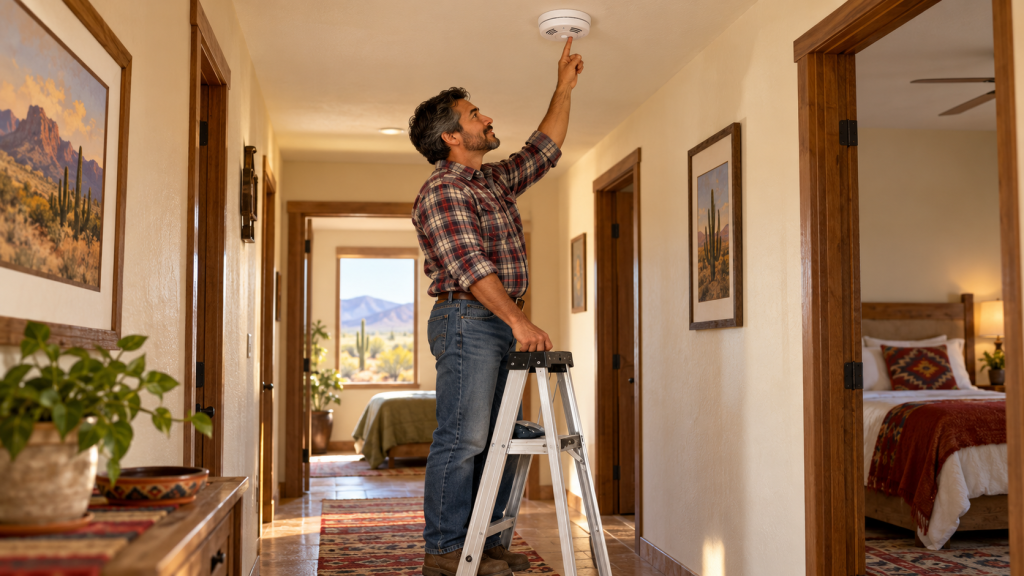
Working alarms and a practiced escape plan give your household more time to respond.
- Install smoke alarms inside every bedroom, outside sleeping areas, and on every level of your home. Test them monthly and replace smoke alarms when they are 10 years old.
- Install carbon monoxide alarms according to the manufacturer’s instructions.
- Identify two ways out of each room where possible. Choose an outdoor meeting place and practice your escape plan with everyone in your household.
- Stay in the kitchen when frying or cooking with oil. Keep combustible items away from the stove.
- Keep space heaters at least three feet from anything that can burn. Turn them off before leaving the room or going to sleep.
If there is a fire, get outside, stay outside, and call 911 from a safe location. Never go back inside for belongings or pets.
Wildfire Preparedness & Evacuation
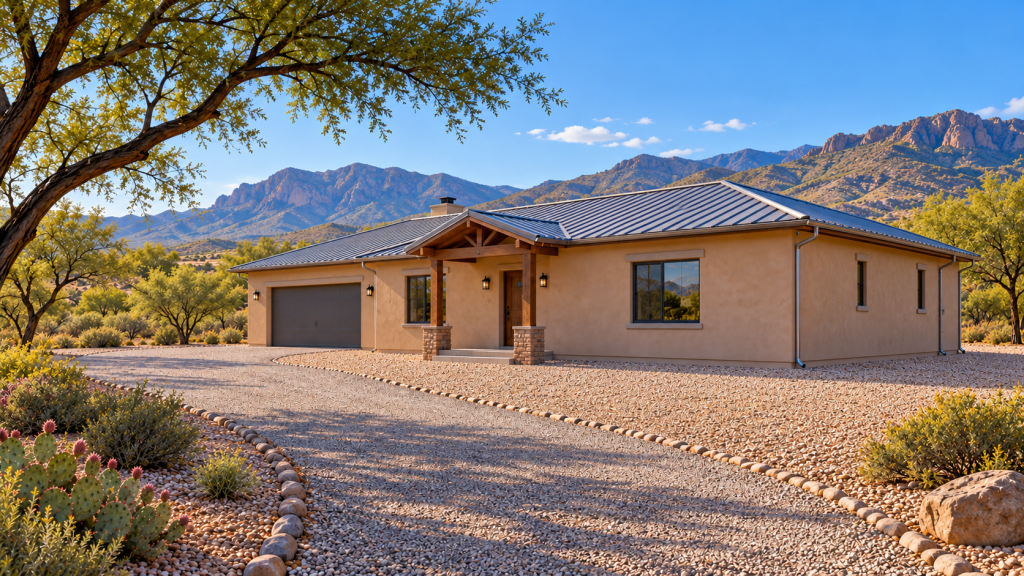
Reduce potential fuel around your home by removing dry leaves, pine needles, and debris from roofs, gutters, and beneath decks. Keep combustible materials away from the house and maintain clear access for emergency vehicles.
Know Arizona’s Ready, Set, Go! evacuation guidance:
- Ready: Prepare your household, sign up for alerts, and have emergency supplies ready.
- Set: A threat is nearby. Be prepared to leave at a moment’s notice and consider leaving early if anyone needs extra time or assistance.
- Go: Leave immediately when directed by public safety officials. Follow their instructions and recommended routes.
Plan transportation for pets and livestock before an emergency. Keep medications, important documents, and essential supplies ready to take with you.
If you feel unsafe, leave early. Do not wait for an official notification when danger is approaching.
Build an Emergency Kit
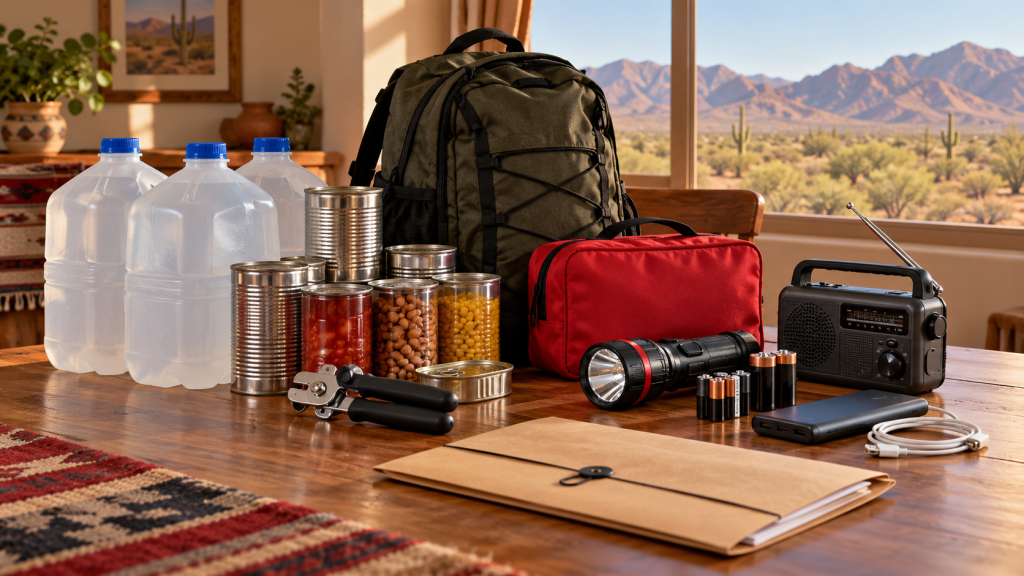
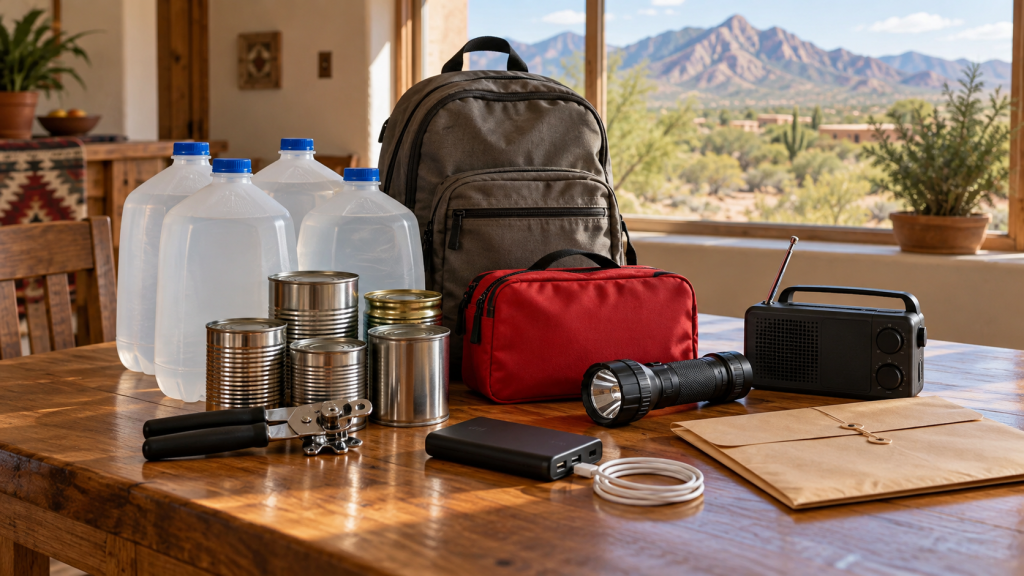
Keep supplies together in an accessible location, with a portable bag ready in case you need to leave quickly.
Include:
- Water—at least one gallon per person per day for several days; plan for additional needs in hot weather.
- Nonperishable food and a manual can opener.
- Flashlights, spare batteries, and a battery-powered radio.
- Phone chargers and a portable power bank.
- First aid supplies, medications, and necessary medical equipment.
- Hygiene supplies, clothing, and sturdy shoes.
- Copies of important documents, emergency contacts, and some cash.
- Supplies for infants, pets, and other household needs.
Check your kit regularly and replace expired supplies.
Make a Household Emergency Plan
Discuss how your household will communicate, where you will meet, and what you will do if you need to evacuate.
Choose a meeting place near your home and another outside your neighborhood. Identify an out-of-area contact who can help family members share updates if local communications are disrupted.
Include arrangements for children, older adults, people with disabilities, and anyone who relies on medication or powered medical equipment. Plan who will help, how transportation will work, and where you can go.
Monsoon & Flash Flood Safety
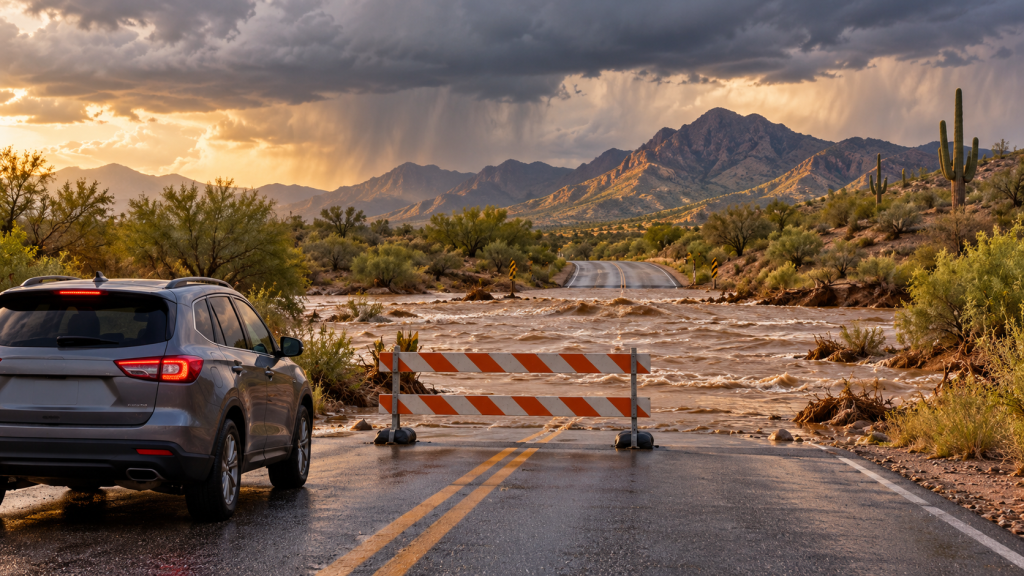
Flooding can make roads and washes dangerous very quickly.
- Never drive or walk through floodwater.
- Do not drive around barricades or enter closed roads.
- Keep children and pets away from flooded washes, drainage channels, and moving water.
- When you hear thunder, move into a substantial building or an enclosed, hard-topped vehicle.
- Monitor weather alerts and allow extra time to reach a safe location.
Turn Around, Don’t Drown®—choose another route when a road is flooded.
Extreme Heat & Power Outages
Stay hydrated, limit strenuous outdoor activity during the hottest part of the day, and spend time in air-conditioned locations. Check on neighbors and family members who may need assistance. Never leave children or pets in a parked vehicle.
During an outage, use flashlights instead of candles and keep refrigerator and freezer doors closed as much as possible. Have a backup plan for medical equipment that requires electricity.
Operate portable generators outdoors, at least 20 feet from doors, windows, and vents, with exhaust directed away from buildings. Never operate them inside a home or garage.
Outdoor Burning
Before burning, review the District’s current burn information, obtain any required permit, and follow all permit conditions. Submitting an application does not authorize burning.
Have a Fire Safety Question?
Contact Saint David Fire District for non-emergency fire safety questions.
Non-Emergency: (520) 720-4045
For emergencies, call 911.